
Passing the NCLEX is the ultimate milestone in transitioning from a passionate nursing student to a licensed Registered Nurse (RN) or Practical Nurse (PN). However, with the introduction of the Next Generation NCLEX (NGN), the game has evolved. The exam no longer just tests your rote memorization; it evaluates your Clinical Judgment—your ability to make critical, real-time decisions in a high-pressure healthcare environment.
If you are preparing for the NCLEX and feeling overwhelmed by the new case studies and item types, this comprehensive guide is for you. Let’s dive deep into the ultimate strategy to conquer the NGN on your first attempt.
1. Understanding the NextGen NCLEX (NGN) Evolution
The National Council of State Boards of Nursing (NCSBN) launched the NGN to bridge the gap between what nursing schools teach and what real-world clinical practice demands.
What Makes NGN Different?
The core difference lies in how questions are asked. Traditional multiple-choice questions are now accompanied by immersive Case Studies that mimic a real electronic health record (EHR) system. You will be required to analyze client data, notice subtle changes in vital signs, and prioritize nursing interventions.
New Question Formats to Master:
- Extended Multiple Response: Allowing you to select multiple correct options across a matrix.
- Drag and Drop (Cloze): Matching clinical manifestations to potential diagnoses.
- Highlighting: Selecting specific sentences or laboratory values in a client’s chart that indicate worsening conditions.
- Matrix/Grid: Evaluating multiple data points simultaneously to determine the appropriate nursing action.
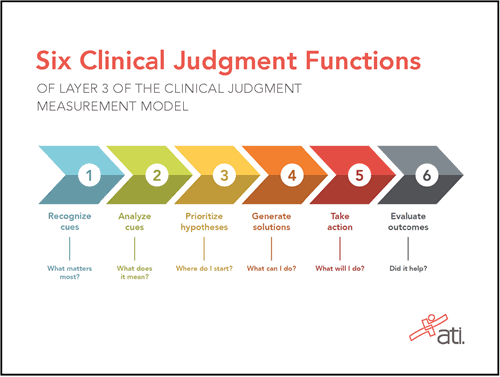
2. The 6 Steps of the NCSBN Clinical Judgment Measurement Model (NCJMM)
To pass the NGN, you must train your brain to think like the test makers. The exam evaluates your critical thinking based on six distinct cognitive steps:
[Recognize Cues] ➔ [Analyze Cues] ➔ [Prioritize Hypotheses]
                                             │
[Evaluate Outcomes] ⮠ [Take Action] ⮠ [Generate Solutions]
- Recognize Cues: What matters most? Identify abnormal vital signs, lab results, and patient history.
- Analyze Cues: What do these findings mean? Link the signs and symptoms to potential underlying pathophysiologies.
- Prioritize Hypotheses: Where do I start? Determine which issue is the most life-threatening or urgent (Remember your ABCs: Airway, Breathing, and Circulation).
- Generate Solutions: What can I do? Define the optimal nursing interventions and evidence-based practices for the client’s specific condition.
- Take Action: How do I implement it? Administering the correct medication, notifying the provider, or initiating emergency protocols.
- Evaluate Outcomes: Did it work? Assessing the patient’s response to the actions you took.
3. High-Yield Topics: What to Focus On
While you need a broad understanding of nursing concepts, certain areas are heavily featured on the NCLEX. Prioritize your study hours around these high-yield domains:
A. Safe and Effective Care Environment
- Management of Care: Advance directives, client rights, prioritization, delegation, and informed consent.
- Safety and Infection Control: Personal Protective Equipment (PPE), transmission-based precautions, and surgical asepsis.
B. Pharmacology & Parenteral Therapies
Pharmacology is traditionally one of the toughest sections for test-takers. Do not just memorize drug names; understand their mechanisms of action, critical side effects, and nursing considerations.
- Key Focus: High-alert medications (Insulin, Heparin, Digoxin), therapeutic drug levels, and antidotes.
C. Physiological Integrity
- Reduction of Risk Potential: Interpreting diagnostic tests, lab values (Electrolytes, ABGs, CBC), and managing potential complications from surgical procedures.
- Physiological Adaptation: Fluid and electrolyte imbalances, pathophysiology of major systems (Cardiovascular, Respiratory, Renal, Endocrine), and medical emergencies.
4. The Blueprint of a Successful NCLEX Study Plan
Consistency beats intensity every single time. Cramming the week before the exam is a recipe for high anxiety and low performance. Instead, follow this structured blueprint:
Phase 1: Content Review (Weeks 1–4)
Focus on building a rock-solid foundation. Review major disease processes, system by system. Pair your reading with conceptual videos to visualize complex mechanisms like the Renin-Angiotensin-Aldosterone System (RAAS) or cardiac conduction.
Phase 2: Q-Bank Integration (Weeks 5–8)
Start practicing daily questions. Aim for 75 to 100 questions per day.
- Crucial Rule: Do not just check if you got the answer right or wrong. Read the rationales carefully. The secret to passing the NCLEX lies entirely within the rationales.
Phase 3: Simulated Mock Tests (Weeks 9–10)
Take full-length, timed mock exams to build physical and mental stamina. The NCLEX is a variable-length adaptive test; practicing under exam-like conditions reduces test anxiety significantly.
5. Pro-Tips for Exam Day Success
- Pace Yourself: The NGN is a marathon, not a sprint. Take your time reading the case studies. Missing a small detail in the patient history can change the entire outcome of the question.
- Beware of “Absolute” Words: Options containing words like always, never, all, or none are rarely the correct answer in nursing. Healthcare is nuanced.
- Trust Your Instincts: Your first choice is usually the correct one based on your subconscious knowledge. Avoid changing your answers unless you missed a critical piece of information in the question stem.
- Rest Before the Test: Put the books down at least 24 hours before your exam appointment. A well-rested, sharp mind is your most valuable asset in the testing center.
Conclusion
The NextGen NCLEX may seem daunting, but it is designed to ensure you are safe to practice. By shifting your mindset from pure memorization to analytical clinical judgment, you are not just preparing to pass an exam—you are preparing to save lives.
Stay focused, follow your study plan, trust your training, and you will see those two beautiful letters next to your name very soon: RN.
Ready to jumpstart your preparation? Check out our latest [Mock Test Series] and interactive NGN case studies designed to give you the real exam experience!